How often should you repaint a house on the Maine coast?
By OpenWave team · · 3 min read
Go by the condition of the paint, not the calendar. On the Maine coast, sun, wind-driven rain, fog and freezing weather wear a finish out faster on exposed sides. An older USDA Forest Service bulletin puts one coat of paint over primer at 4 to 5 years, and two coats at up to 10.
What wears paint out on the Maine coast?
No single factor does it. Sun breaks down the surface of the paint, and the south and west sides of a house take the most of it. A USDA Forest Service bulletin on wood siding notes that areas fully exposed to sun and rain are the first to deteriorate, which is why they get the most attention.
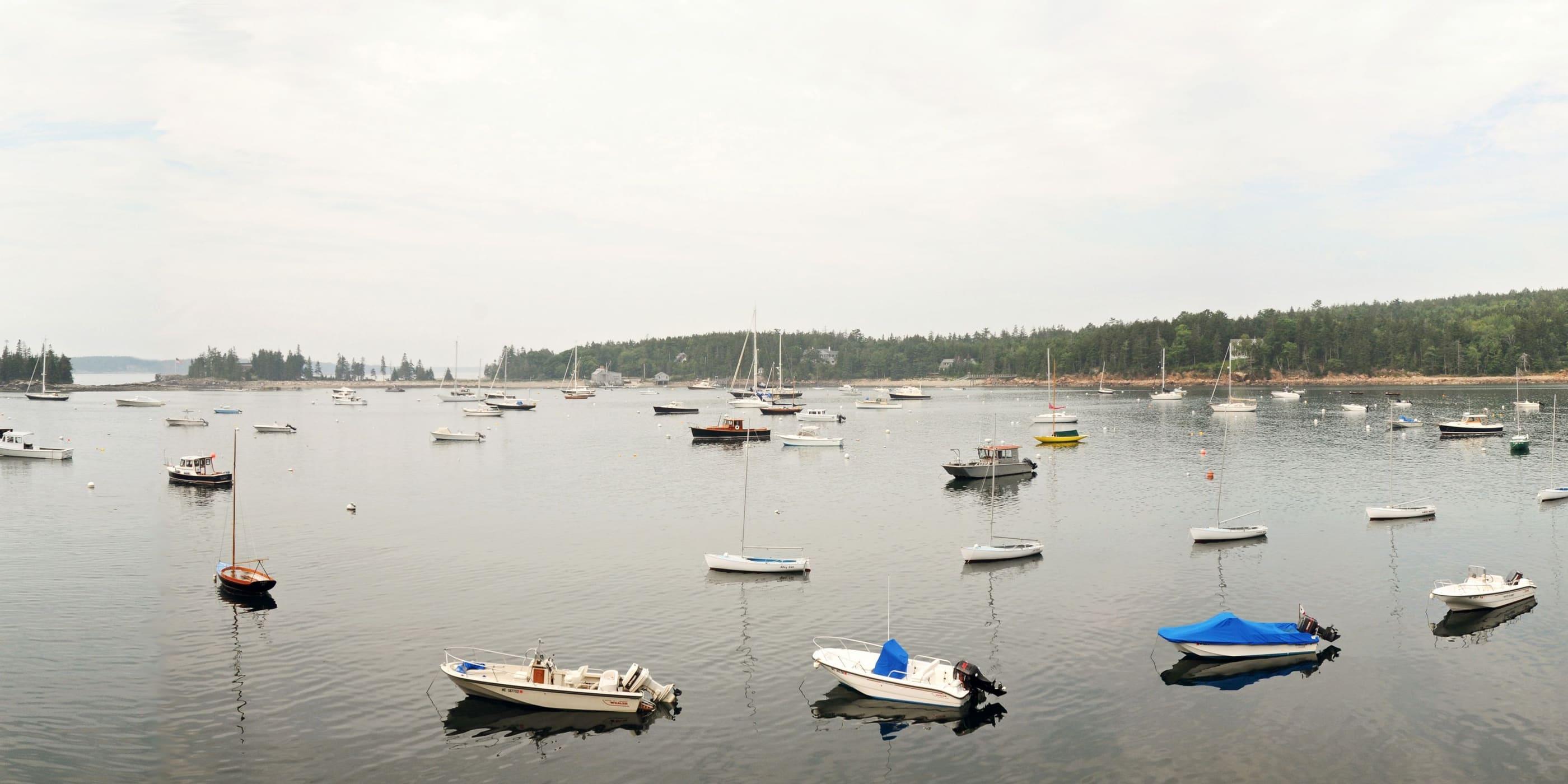
Moisture is the other half. The National Park Service describes spring weather on Mount Desert Island as foggy, and lists winter as variable, at 14 to 35°F. That puts the siding through damp mornings, then cold, then thaw, again and again. Water that gets behind a paint film, whether from rain, from fog or from inside the house, is what makes it blister and peel. The Forest Service bulletin also notes that water vapor from inside a house can collect in the siding in winter and blister the paint in spring.
Salt and wind add to it on exposed shorelines, so a house on the water can need work sooner than one set back in the woods. The prep and the paint matter as much as the setting.
How long does paint last compared with stain?
Treat any number as a range. The USDA Forest Service bulletin, Wood Siding: Installing, Finishing, Maintaining (revised 1983), says one coat of good house paint over a primer should last 4 to 5 years on wood suited to painting, and two coats up to 10. For penetrating stain it gives 2 to 4 years for one coat on new wood, and up to 10 years for a two-coat system on rough wood in certain exposures. It is an older publication, and modern coatings have changed, so the maker’s guidance for the product you use is the better guide.
The difference between the finishes is in how they fail. Paint and solid-color stain form a film on the surface, which can blister or peel if moisture gets behind it. Semi-transparent penetrating stains soak into the wood, so the bulletin says they do not blister or peel, and they are easier to refinish: a stiff brush, then a new coat, without heavy scraping.
Paint or stain for cedar shingles and clapboard?
- Smooth clapboard and trim: paint is the better fit, and the only route to a bright white. The bulletin says paint performs best on smooth, edge-grained lumber such as cedar
- Rough-sawn boards and shingles: stain is usually the better fit. The bulletin says stains are most effective on rough surfaces
- Solid-color stain: looks like thinned paint, hides the grain, and forms a film
- Semi-transparent stain: shows the wood grain, easy to renew, not available in white
You cannot put a semi-transparent stain over old paint or a solid stain, so the choice you make now decides what the next coat can be. If the house already has paint, the answer is usually paint again.
What are the signs it is time to repaint?
- Peeling or flaking paint, especially around windows, trim and the bottoms of boards
- Bare or graying wood. The bulletin says refinishing is needed when the wood begins to gray
- Chalking: a powdery residue that comes off on your hand when you wipe the surface
- Mildew, which shows as dark or green patches. It has to be cleaned off before painting, because it can grow through a new coat
- Cracked caulk, soft wood, or blistering paint
Repainting while the old paint is still sound is simpler than repairing wood once it is exposed. An estimate will tell you which stage your house is at.
When should you book it?
Exterior work needs dry days above the label minimum, so on the island it falls in the warmer months. Ask for an estimate in winter or early spring. We give free estimates, and we are based on the island. Once the job starts, you get a photo update every day, so you can follow the job without being there.